


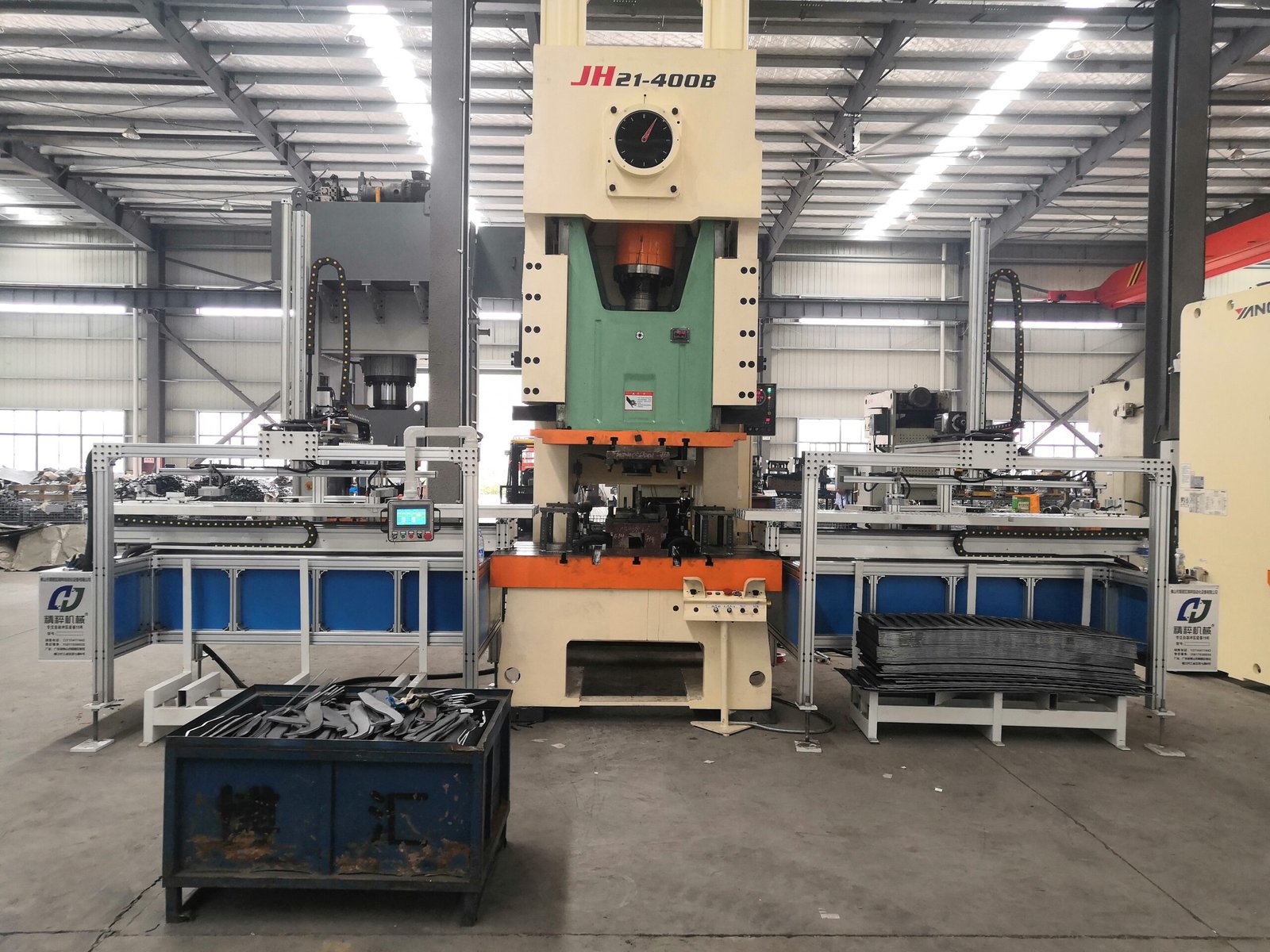
I. Pre-start Preparation
First, the operator must conduct equipment inspection to ensure that the power and air pressure connections of the feeder, material rack, and press are normal. Key checks include confirming that the feed rollers and guide rails are clean, free of debris or oil stains. Then, based on production orders and mold requirements, accurately set core parameters such as feed length, oscillation width, and feed frequency on the Human-Machine Interface (HMI), and complete the calibration of the mold centerline.
II. Material Loading and Threading
Use a crane or forklift to safely hoist and place the coil onto the material rack, securing it via hydraulic expansion or non-powered methods. Manually flatten the leading edge of the material, then thread it sequentially through the leveling machine and the feed rollers of the oscillating feeder. This process must be carried out in jog mode, slowly advancing the material to the mold entrance to ensure no deviation or slippage in the feed rollers.
III. Automatic Operation and Monitoring
After threading and final parameter verification, activate automatic operation mode. The equipment will execute the coordinated cycle of “feeding – oscillating – stamping – returning” in sync with the press rhythm. The operator must closely monitor feed accuracy and oscillation positioning during the initial cycles, while watching for abnormal vibrations or noise.
IV. Shutdown and Reset
Upon production completion or when material changeover is required, first stop the press at top dead center, then pause the feeder. Select the “Reset” function on the control system to return the oscillating platform to its mechanical origin. Finally, disconnect the equipment’s power and air supply, and clean and maintain the work area to prepare for the next production run.